Be yourself; Everyone else is already taken.
— Oscar Wilde.
This is the first post on my new blog. I’m just getting this new blog going, so stay tuned for more. Subscribe below to get notified when I post new updates.
Be yourself; Everyone else is already taken.
— Oscar Wilde.
This is the first post on my new blog. I’m just getting this new blog going, so stay tuned for more. Subscribe below to get notified when I post new updates.
“The Church should not interfere in politics since the Constitution provides for the separation of Church and state.” This is usually the reaction every time bishops, priests, and religious denounce extrajudicial killings, human rights abuses, corruption, antipoor economic policies, etc.
The 1987 Constitution of the Philippines declares: The separation of Church and State shall be inviolable. (Article II, Section 6), and, No law shall be made respecting an establishment of religion, or prohibiting the free exercise thereof.
What does the separation of Church and state really mean? In the first place, this is not about what the Church is forbidden to do – getting involved in politics. It is about what the state is prohibited from doing – the establishment of an official state religion and the use of public money to support such religion. This allows for religious pluralism. The free exercise of religion is recognized and guaranteed. The state cannot interfere in the affairs of the Church or any other religious groups.
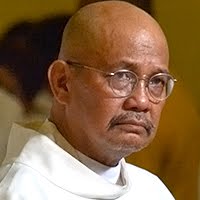
From a historical perspective, the principle of separation of Church and state was a reaction to the union of Church and state which was expressed in Patronato Real or royal patronage. This was operative in Europe and in the Philippines for 3 centuries under Spanish colonial rule. The patronato was based on the principle of the state choosing an official religion – e.g. Catholicism (to the exclusion of other religions) – and the state’s obligation to support such religion. This means providing financial support for the clergy, the building of churches and monasteries, and the defense of the Church against her enemies.

The Church needed the patronage of the state to carry out her mission. In exchange, the state gained the right to interfere in the internal affairs of the Church. The approval of the state was needed for the appointment of bishops, the establishment of religious orders and communities, and the construction of churches and monasteries. There were times when rulers could even call for Church councils to settle doctrinal controversies and heresies that threatened the unity of the state. The state could even interfere in papal elections. In its extreme, the patronato led to state absolutism and control of the Church.
“Separation of Church and State” is one of the most misunderstood phrases is modern political discourse. Yet, it is also a phrase with deep roots in Baptist tradition and one that we, as Christians, should have a healthy understanding of as we seek to engage in the public sphere.
“The Church should not interfere in politics since the Constitution provides for the separation of Church and state.” This is usually the reaction every time bishops, priests, and religious denounce extrajudicial killings, human rights abuses, corruption, antipoor economic policies, etc.
The 1987 Constitution of the Philippines declares: The separation of Church and State shall be inviolable. (Article II, Section 6), and, No law shall be made respecting an establishment of religion, or prohibiting the free exercise thereof.
What does the separation of Church and state really mean? In the first place, this is not about what the Church is forbidden to do – getting involved in politics. It is about what the state is prohibited from doing – the establishment of an official state religion and the use of public money to support such religion. This allows for religious pluralism. The free exercise of religion is recognized and guaranteed. The state cannot interfere in the affairs of the Church or any other religious groups.
From a historical perspective, the principle of separation of Church and state was a reaction to the union of Church and state which was expressed in Patronato Real or royal patronage. This was operative in Europe and in the Philippines for 3 centuries under Spanish colonial rule. The patronato was based on the principle of the state choosing an official religion – e.g. Catholicism (to the exclusion of other religions) – and the state’s obligation to support such religion. This means providing financial support for the clergy, the building of churches and monasteries, and the defense of the Church against her enemies.
The Church needed the patronage of the state to carry out her mission. In exchange, the state gained the right to interfere in the internal affairs of the Church. The approval of the state was needed for the appointment of bishops, the establishment of religious orders and communities, and the construction of churches and monasteries. There were times when rulers could even call for Church councils to settle doctrinal controversies and heresies that threatened the unity of the state. The state could even interfere in papal elections. In its extreme, the patronato led to state absolutism and control of the Church.
“Separation of Church and State” is one of the most misunderstood phrases is modern political discourse. Yet, it is also a phrase with deep roots in Baptist tradition and one that we, as Christians, should have a healthy understanding of as we seek to engage in the public sphere.
This is an example post, originally published as part of Blogging University. Enroll in one of our ten programs, and start your blog right.
You’re going to publish a post today. Don’t worry about how your blog looks. Don’t worry if you haven’t given it a name yet, or you’re feeling overwhelmed. Just click the “New Post” button, and tell us why you’re here.
Why do this?
The post can be short or long, a personal intro to your life or a bloggy mission statement, a manifesto for the future or a simple outline of your the types of things you hope to publish.
To help you get started, here are a few questions:
You’re not locked into any of this; one of the wonderful things about blogs is how they constantly evolve as we learn, grow, and interact with one another — but it’s good to know where and why you started, and articulating your goals may just give you a few other post ideas.
Can’t think how to get started? Just write the first thing that pops into your head. Anne Lamott, author of a book on writing we love, says that you need to give yourself permission to write a “crappy first draft”. Anne makes a great point — just start writing, and worry about editing it later.
When you’re ready to publish, give your post three to five tags that describe your blog’s focus — writing, photography, fiction, parenting, food, cars, movies, sports, whatever. These tags will help others who care about your topics find you in the Reader. Make sure one of the tags is “zerotohero,” so other new bloggers can find you, too.
 ggaga.blog.com